Free multiplayer games
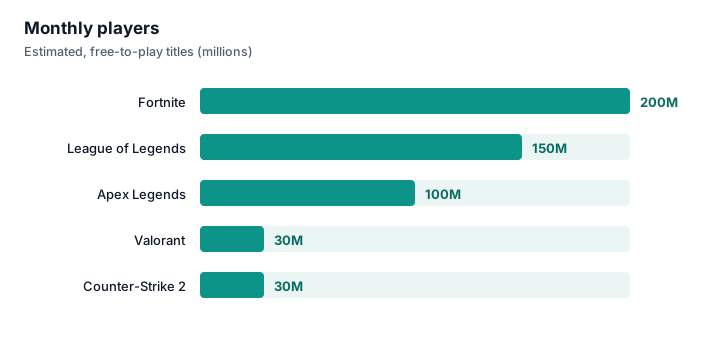
The biggest online games in the world in 2026 are free to download and play. They are also among the most lucrative entertainment products ever made. This page explains how that works.
The headline F2P titles
- Fortnite (Epic Games, 2017) — battle royale with regular “seasons”, cross-platform play, a creator-mode ecosystem and an event-driven storyline. Free to play, monetised through V-Bucks (the in-game currency) and a roughly 10-EUR battle pass per season.
- Valorant (Riot Games, 2020) — tactical 5v5 shooter, free to play, monetised through cosmetic weapon skins and bundles. Riot is a Tencent subsidiary.
- League of Legends (Riot Games, 2009) — the dominant MOBA. Champions are unlocked through play or purchase; cosmetic skins drive most revenue.
- Apex Legends (EA / Respawn, 2019) — hero-shooter battle royale, similar economy to Fortnite. Decline in player numbers through 2024-25 but still substantial.
- Counter-Strike 2 (Valve, 2023) — the long-running CS franchise, now free, monetised primarily through skin trading and the Steam marketplace.
- Genshin Impact (HoYoverse, 2020) — a free open-world RPG with gacha monetisation. Cross-platform, with PC, mobile, and PlayStation versions.
What “free” really means
All of these titles are free to download. None of them is free to fully experience without an investment of time, money, or both. The unwritten contract is usually one of three:
- Cosmetic-only monetisation — you pay for how your character looks, never for power. Fortnite, Valorant, CS2 sit here. Critics still object to children spending hundreds on skins, but at least the matches themselves are fair.
- Battle pass with progression — a small one-off payment per season unlocks a track of cosmetic rewards as you play. Most big F2Ps in 2026 use this model. Roughly 10 EUR per season; lapse a season and you miss those items forever.
- Gacha — pay for randomised pulls of characters or items. The strongest characters often sit behind very low pull rates, which can make completing a roster expensive. Genshin Impact, Honkai: Star Rail and many mobile titles use this. Increasingly regulated — Belgium effectively bans loot boxes for minors; the EU is debating wider rules.
Time as a cost
Free-to-play games are also designed to monetise attention. Battle passes are structured to require regular play over a 10- to 12-week season; daily quests, weekly resets and limited-time events all reward consistent engagement. A player who logs in casually may struggle to keep up. This is a real cost, but rarely discussed alongside the price tags.
The competitive scene
Most of the major F2P titles support thriving esports scenes — League of Legends Worlds, Valorant Champions Tour, Fortnite World Cup, Apex Legends Global Series. These tournaments draw audiences comparable to traditional sports broadcasts in some demographics. Watching is free; competing seriously requires hardware, time, and often a managed coaching environment.
Free PC alternatives without IAPs
If you want genuinely free, no-strings online multiplayer, look outside the big franchises:
- 0 A.D. — open-source historical RTS, fully free, online multiplayer.
- Team Fortress 2 — free since 2011, still active, cosmetics-driven economy but very playable without spending.
- Open Hexagon, Endless Sky, Beyond All Reason — community-run open-source projects, all genuinely free with no monetisation.
- Wesnoth — turn-based fantasy strategy, open source, with online multiplayer.
Frequently Asked Questions
- Can I play Fortnite or Valorant without spending anything?
Yes — both are fully playable for free. You will not have any cosmetic skins, and you will not progress through the seasonal battle pass past the free tier, but the gameplay itself is identical for paying and non-paying players.
- Are loot boxes still legal?
Mostly yes, with caveats. Belgium and the Netherlands have effectively restricted them. The EU has been debating tighter rules for minors since 2023. Most countries treat cosmetic-only loot boxes as legal but require minor-purchase controls. Gacha games occupy a grey zone in many jurisdictions.
- What is a battle pass worth?
It depends on how much you play. A typical season pass costs around 10 EUR and offers cosmetic items over a 10-12 week run. Players who finish the pass usually get good value; players who don’t may have been better off spending on individual items.